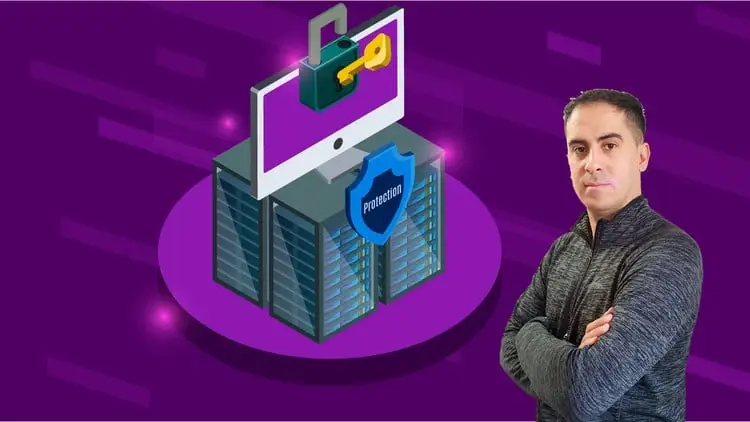
Cyber Security (SOC) Interview Questions and Answers en Udemy: opiniones y temario
Nail Your Next Cyber security SOC Interview: Most Common Questions and Answers for SOC Analyst Roles Simplified

De qué trata el curso
Este curso de Udemy, de Cyber talents y Madhu S, está pensado para preparar entrevistas de analista SOC. Tiene 148 lecciones y 11 horas y se actualizó en julio de 2026.
No enseña desde cero: repasa preguntas y respuestas habituales. Está en inglés. Aquí vemos si encaja con tu momento profesional.
Lo que aprenderás
- SOC Analyst: Self-Introductions for Fresher, L1, and L2 SOC Levels
- SOC General Interview Questions and Answers
- Interview Questions and Answers on Computer Network and Network Security
Nuestra opinión
La nota es de 4,42 sobre 5 con 333 reseñas y unos 4.286 alumnos. Es una valoración sólida y con muestra razonable.
Ventajas: el temario es muy amplio y orientado a lo que se pregunta de verdad: modelo de SOC, redes, defensa, ataques, Windows, malware, phishing, logs, frameworks, MITRE ATT&CK, inteligencia de amenazas, threat hunting, SIEM (Splunk, QRadar, ELK, Sentinel) y preguntas de escenario. Incluye cómo presentarte según seas junior, L1 o L2.
Inconvenientes: responder preguntas no sustituye a la experiencia. Si memorizas respuestas, un entrevistador lo notará. Además, está en inglés, sin subtítulos en español, y parte del contenido es declarativo, sin laboratorios. Algunos datos de perfil y requisitos aparecen con texto algo descuidado en la descripción.
En resumen: es una buena herramienta de repaso con bastantes reseñas, siempre que ya tengas conocimientos. Úsalo para ensayar tus respuestas con tus propias palabras y apoyarlas con prácticas reales, no para memorizarlas.
Temario completo
19 secciones y 148 elementos, tal y como aparecen en Udemy.
1 SOC General Interview Questions and Answers · 9 lecciones
- Our Community
- What All Tools and Technologies you are using in SOC
- What type of SOC Model you are working (Inhouse/MSSP/Hybrid SOC)
- What is your Security team size and Hierarchy
- What all Different Log sources Integrated to your Clients SIEM
- How many Alerts You received per day
- Describe how you categorize and prioritize incidents in your SOC
- At the beginning of your shift as a SOC analyst, what tasks do you typically do
- In the Security Operations Center (SOC), which teams do you collaborate with?
2 Interview Question and Answers on Computer Network and Network Security · 16 lecciones
- Explain OSI layers
- Explain What is TCP 3-Way handshake and How it works?
- Explain TCP header
- Explain IP header
- What is Difference Between TCP and UDP
- Explain Classes of IP address and Tell us Private IP address range
- Explain What is DHCP and How it works
- What is DNS Server and How it works?
- What is Firewall? What is Stateful Inspection in Firewall
- Difference Between Traditional Firewall VS Next generation Firewall
- What is Difference between Firewall Deny and Drop? What is IDS/IPS
- What is Difference between Firewall and IPS
- What is Proxy server and Types?
- Protocols and Port Number
- Windows and Linux commands
- Important Linux commands
3 Interview Question and Answers on Cyber Defense · 14 lecciones
- What is CIA (Confidentiality, Integrity, and Availability)
- What is Encryption& Decryption? Types of it
- What is Hashing
- Difference between Encoding, Encryption and Hashing
- Types of Hackers
- What is Threat, Vulnerability and Risk?What is Zeroday attc,Exploit and payload
- What is Event, Alert and Incident?
- What is True Positive, False Positive, True Negative and False Negative
- What is IOC and IOA?
- What is Data Leakage? What is BOT and BOTNET?
- What are the HTTP response codes?
- What are differences between SSL and TLS?
- What is File-Based Malware and File less Malware?
- Explain CVE and CVSS?
4 Interview Question and Answers on Cyber attacks · 14 lecciones
- Please explain DOS and DDOS Attacks?
- Explain Pass the hash attack
- Explain MAN-IN-THE-MIDDLE Attack
- What is Spoofing and types of Spoofing attacks
- Explain Brute force attack how you Mitigate
- Explain Password Spray attack how you Mitigate
- What is Credential Stuffing Attack and Rainbow Table Attacks? Mitigations
- Explain Dictionary attack and Mitigation
- Explain OWASP and list top 10 vulnerabilities
- Explain Security Misconfiguration and Mitigation
- Explain SQL Injection and Mitigations
- Explain Cross-Site Scripting (XSS) and Mitigation
- Explain Server-Side Request Forgery (SSRF) and Mitigation
- Some recent major cyber attacks, and how do you stay up to date with latest news
5 Interview Question and Answers on Windows · 10 lecciones
- What is Active directory
- What is Kerberos and how Kerberos Authentication works?
- Common fields in Windows event logs
- Can you please tell few Windows event ID’s
- Explain the purpose of the Windows Security Event Logs? why are they important?
- Windows logon Types
- What is the difference between a user account and a service account in Windows?
- Log in failures specific error codes
- What is the Windows Registry, and how is it crucial to system operations?
- Explain the use of Windows PowerShell logging for security monitoring.
6 Malware Interview Questions and Answers · 6 lecciones
- What is Malware and Types
- Difference Between Virus, Worm &Trojan
- What is Malware analysis and Types of Malware analysis?
- How do you perform Static Malware analysis?
- How do you perform Dynamic Malware analysis?
- Name Some tools You use while analyzing Malware?
7 Phishing Interview Questions and Answers · 4 lecciones
- What is Phishing and Types of Phishing attacks
- What are the Signs of Phishing?
- What is the significance of email authentication protocols (SPF, DKIM, DMARC)
- What measures can organizations implement to secure against phishing attacks
8 Interview Q and A on Log fields from various security devices for Log analysis · 10 lecciones
- What Common log types SOC team collect Across infrastructure
- Can you explain Important fields in Firewalls for analysis
- Can you explain Important fields in IPS (intrusion Prevention system
- Can you explain Important fields in EDR
- Can you explain Important fields in Email gateway
- Can you List /explain Important fields in Proxy device
- What logs SOC team collect from AWS Cloud for analysis
- What logs SOC team collect from Azure Cloud for analysis
- What logs SOC team collect from Google Cloud for analysis
- What are logging levels in network devices
9 Interview Question and Answers on Security Frameworks · 5 lecciones
- What is TTP
- What is MITRE ATT&CK framework
- Explain MITRE framework TTP’s (Phases in MITRE)
- Explain MITRE framework TTP’s (Phases in MITRE..Conti)
- Explain Incident response and phases
10 Interview Questions and Answers on Mitre Att&CK · 7 lecciones
- Initial Access: How can attackers successfully gain Initial Access to a target
- Execution: Explain how attackers execute malicious code on a compromised system
- Persistence: Give an example of how attackers establish Persistence on a comput
- Privilege escalation How do attackers typically escalate privileges
- Defenses Evasion: Explain how attackers successfully evade security defenses
- Credential access: Provide an example of how attackers obtain credentials
- Discovery: How do attackers conduct Discovery to gather information
11 Threat Intelligence Interview Q and A · 10 lecciones
- Can you tell me what you understand Threat Intelligence
- What is Threat Intelligence Feed?
- While Reviewing Threat feeds what are the factors we need to verify?
- Why Threat Intelligence is important today
- What are the Different Phases of Threat Intelligence?
- What are the different types of Threat Intelligence?
- Who Get Most Benefit from Threat Intelligence
- How can threat intelligence be integrated into a SIEM system for proactive threa
- Can you explain about Pyramid of Pain
- Describe a instance where you used threat intelligence to mitigate a Threat
12 Interview Question and Answers on Threat Hunting · 5 lecciones
- What is Threat Hunting, and why is it important
- Can you explain the difference between Threat Detection and Threat Hunting
- What is hypotheses in Threat hunting?
- Describe the process you follow when conducting a threat hunt
- One Example of a successful threat hunting engagement you've been involved in?
13 SIEM General interview Questions and Answers · 8 lecciones
- What is a SIEM and Why We need SIEM
- What is Normalization in SIEM?
- What is Aggregation in SIEM
- What is Correlation in SIEM?
- What is Parsing in SIEM
- Typical SIEM Components
- Explain SIEM Workflow
- Can you name some popular SIEM vendor
14 SIEM Architecture and Components (Splunk, Logrhythm ,ELK,Qradar &Azure Sentinal · 6 lecciones
- Explain Splunk Architecture and Components
- Explain QRadar architecture and Components
- Explain LogRhythm architecture and Components
- Explain Azure Sentinel architecture and Components
- Explain ELK (Elastic search) architecture and Components
- Explain Arcsight architecture and Components
15 Splunk Interview Questions and Answers · 1 lección
- Splunk Interview Questions and Answers for L1 and L2
16 Most widely asked Scenario Question and Answers · 13 lecciones
- Scenario Question on Phishing-Investigation
- Scenario Question on Phishing-immediate steps to remediate Phishing attempt
- Phishing:Implications and Risks Associated with the Incident? how do you educate
- What is role of email filtering in preventing Phishing incidents
- Scenario: Addressing Anomalous Network Traffic Spike During Off-Peak Hours
- Scenario: Malware Outbreak Analysis with Fictional Example
- Scenario: High number of failed login attempts with Fictional Example
- Scenario: Unusual System behavior's: Investigation and Actions to Perform
- Scenario: Ransomeware Investigation and actions to Mitigate
- Scenario: Insider Threat investigation and how to address the situation
- Prioritizing and Remedying Critical Vulnerabilities: Fictional Scenario
- Scenario:Insider Threat: Exfiltrating sensitive data
- Scenario: Incorporate security automation into your daily SOC activities
17 From Alert to Incident: Real SOC Investigations That Uncovered True Threats · 1 lección
- Real Investigations: Encoded PowerShell Via malicious Word Document
18 SOC Techno-Managerial interview · 6 lecciones
- What skills have you acquired in your previous positions
- How would you explain a challenging security problem to a non technically client
- What is your approach to resolving a security issue?
- What was the biggest challenge you faced in your last role and how did you hand
- What do you consider the biggest responsibility of a SOC analyst?
- Imagine you are the team leader of SOC operations. How would you manage your tea
19 SOC Analyst: Self-Introductions for Fresher, L1, and L2 SOC Levels · 3 lecciones
- Introduce Yourself as a Fresher
- Self-Introduction as an L1 SOC Analyst
- Self-Introduction as an L2 SOC Analyst
¿Para quién es este curso?
Te encaja si ya tienes base de ciberseguridad y vas a presentarte a entrevistas para analista SOC, si estás haciendo la transición desde TI o si quieres repasar qué se pregunta en el sector. Es especialmente útil si la entrevista será en inglés.
No es para ti si quieres aprender a trabajar en un SOC desde cero: no hay laboratorios ni prácticas guiadas. Tampoco si prefieres contenido en español o si buscas una preparación basada en tu propia experiencia, que es lo que más valoran los entrevistadores.
Requisitos
- Basic Computer Knowledge
Qué temario tiene realmente
Son 19 secciones. Empiezan con preguntas generales de SOC, redes y seguridad de red (16 clases), defensa, ciberataques, Windows, malware, phishing y campos de logs de dispositivos de seguridad.
Siguen con frameworks, MITRE ATT&CK, inteligencia de amenazas, threat hunting, SIEM general y su arquitectura, Splunk, preguntas de escenario, investigaciones reales "de alerta a incidente", entrevistas tecno-gerenciales y presentaciones para niveles fresher, L1 y L2.
Cómo sacarle partido
Estudia por bloques y no leas las respuestas sin intentarlo antes. Anota tus dudas, busca cada concepto en un laboratorio y vuelve a contestar en voz alta. Así convertirás un repaso teórico en una preparación real.
Idioma y subtítulos
El curso está en inglés (US). Udemy no indica subtítulos en español.
Certificado: qué esperar
Recibirás un certificado de finalización de Udemy. No es una certificación oficial y en una entrevista pesa mucho menos que la experiencia o credenciales como Security+ o BTL1.
Alternativa gratis: empieza por los cursos de TryHackMe de la web
Antes de pagar, empieza por los cursos gratuitos de TryHackMe en español de la web: te darán práctica real con herramientas defensivas, que es lo que se valora en un SOC.
Compensa pagar este curso cuando ya tienes esa base y necesitas ensayar entrevistas en inglés. Si aún no sabes qué es un SIEM, aprende primero y deja el repaso de preguntas para después.
Preguntas frecuentes
¿Es un curso para aprender SOC desde cero?
No. Es un repaso de preguntas y respuestas de entrevista. Necesitas una base previa de ciberseguridad.
¿Está en español?
No. Está en inglés (US) y no tiene subtítulos en español.
¿Qué nota tiene?
4,42 sobre 5 con 333 reseñas y unos 4.286 alumnos.
¿Qué niveles cubre?
Incluye presentaciones para perfiles fresher, L1 y L2, además de preguntas técnicas y de escenario.